
Back to blog
Analysis

What Community Chatter Says About AI Chat Tools

June 8, 2026
What Community Chatter Says About AI Chat Tools

Between June 1 and June 8, 2026, public discussion across the AI tools landscape produced a mixed picture. Tracking 291 total mentions spread across four products, the conversation showed sentiment that swung widely depending on which tool was being discussed. Some products drew steady enthusiasm, others picked up modest goodwill, and at least one weathered a rough stretch of stability complaints.

It is worth being clear about what these numbers represent. Pulse Scores and mention counts reflect aggregated public online discussion, not verified facts about how any product performs. They capture what people were saying, not whether those people were right. With that caveat in mind, here is what the week's data suggested for anyone researching or comparing AI chat and coding tools.
How the Week Broke Down by the Numbers

The headline figure is the lopsided distribution of attention. Of the 291 mentions tracked, Claude accounted for 263, dwarfing every other product in raw volume. ChatGPT trailed at 14 mentions, DeepSeek at 8, and Claude Code at just 6. That imbalance matters when reading the rest of the data: a high-volume product like Claude produces a sentiment signal you can lean on, while single-digit samples should be treated as directional hints rather than firm conclusions.

The Pulse Scores told their own story. Here is the snapshot for the week:

  • DeepSeek led on score at 60, up 1 point, across 8 mentions.
  • ChatGPT sat at 55, down 4 points, across 14 mentions.
  • Claude held flat at 53, with 0 change, across 263 mentions.
  • Claude Code landed at 38, down 11 points, across 6 mentions.

The spread from 38 to 60 is wide for a single week, and the directional movement varied just as much. DeepSeek nudged up, Claude held steady, ChatGPT slipped, and Claude Code fell sharply. Below, each product gets a closer look.

Claude Dominated Volume but Divided Opinion

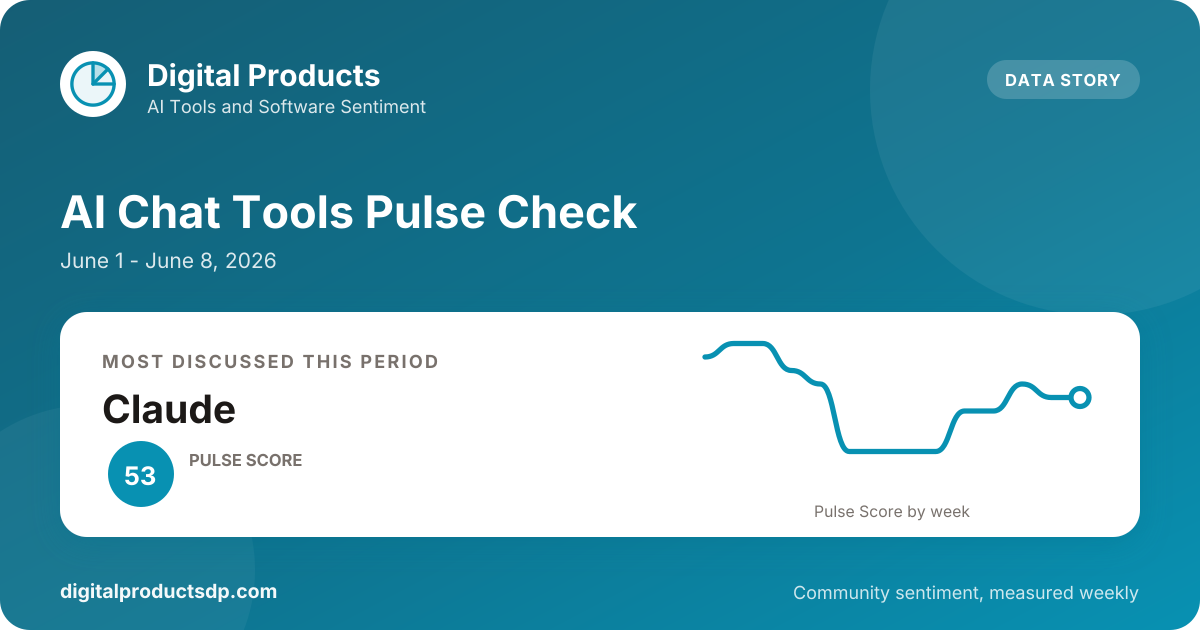
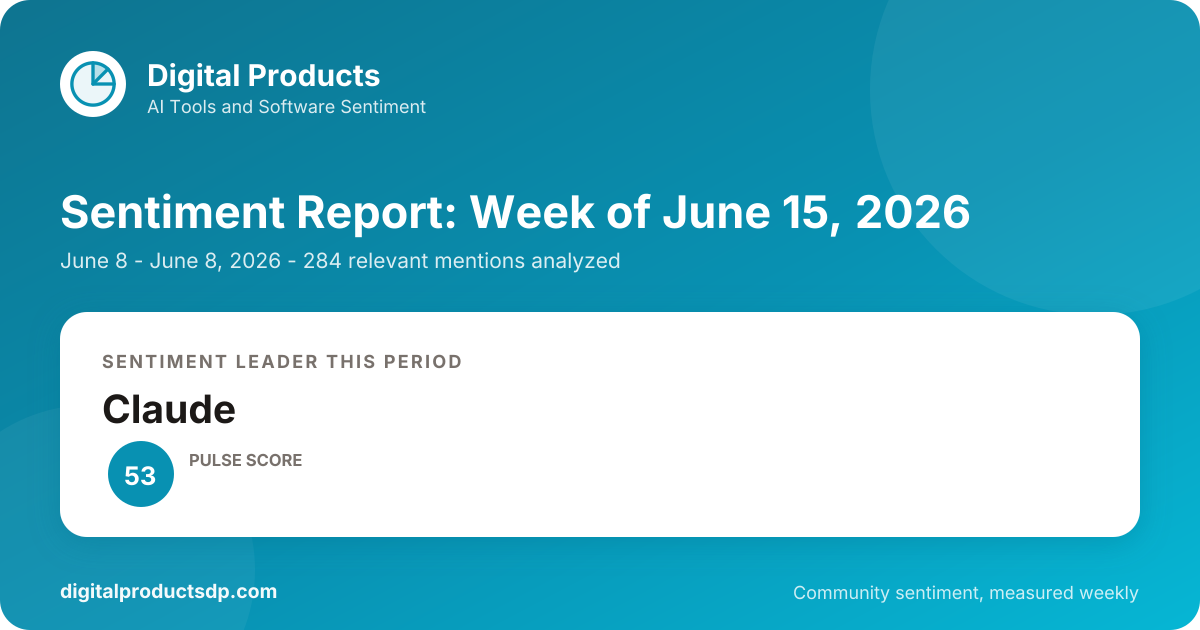
Claude was the center of gravity this week. With 263 mentions and a Pulse Score holding flat at 53, it generated more conversation than the other three products combined, several times over. A flat score across that much volume suggests a settled, if not entirely satisfied, community rather than one in flux.

The detail beneath the score is where things get interesting, because commenters appeared genuinely split. On the positive side, discussion flagged 82 instances of praise tied to AI quality and another 47 tied to strong features. That is a sizable contingent crediting Claude for the things that matter most in a chat tool: the substance of its output and the breadth of what it can do.

The complaints, however, were not minor. Across the same period there were 45 mentions raising concerns about AI quality, 33 citing pricing as too high, and 28 pointing to missing features. The fact that AI quality showed up prominently on both sides of the ledger is telling. It suggests that experiences with Claude's output vary, possibly by use case, prompt complexity, or the specific tasks people throw at it.

Claude Pulse Score trend from aggregated public discussion

For anyone evaluating Claude, the practical read is this: the tool inspires strong feelings in both directions. The praise for quality and features is real and frequent, but so is the pushback on price and gaps in capability. A flat 53 score is the mathematical expression of that tension. If pricing is a concern for your situation, it is worth noting that cost was the second most common complaint, behind only AI quality.

ChatGPT Drew Lighter Traffic and a Small Dip

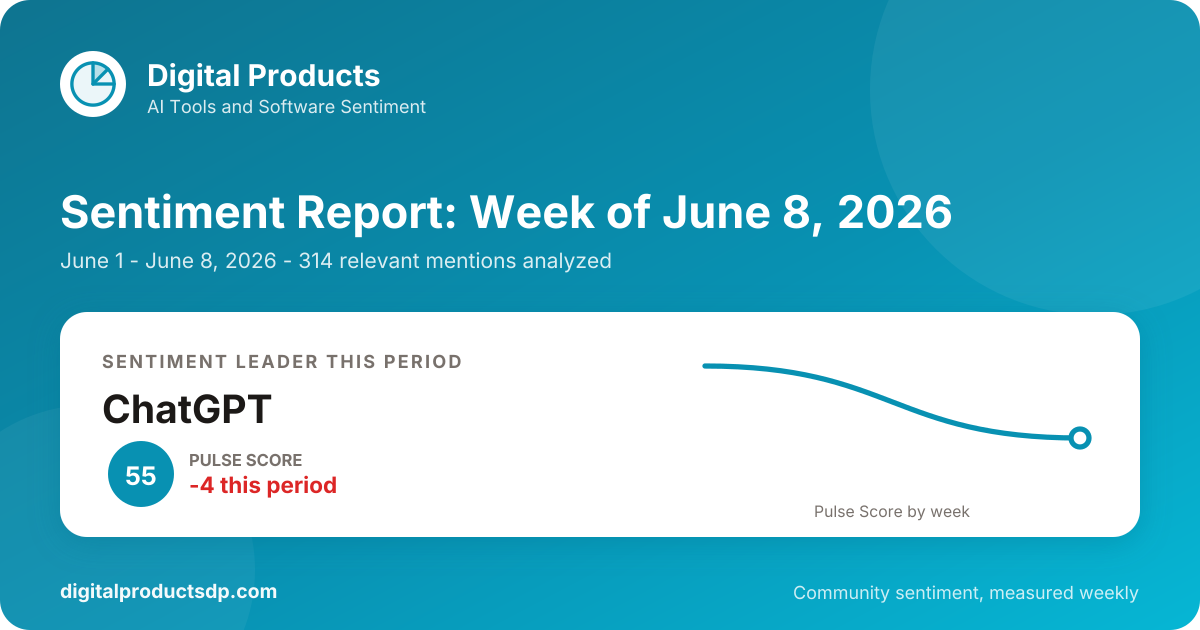
ChatGPT was far quieter in the data this week, with just 14 mentions and a Pulse Score of 55 that slipped 4 points from the prior period. The lower volume is itself notable for a product that historically commands heavy discussion, though week-to-week swings in mention counts are common and should not be over-read from a single snapshot.

Sentiment leaned mildly positive overall, anchored by 9 instances of praise around AI quality. That remains the core of ChatGPT's appeal in the conversation: people credit the output. On the friction side, missing features came up 4 times and UI frustrations appeared 3 times. Neither is a large absolute number, but against a base of 14 mentions, they represent a meaningful share of the discussion.

ChatGPT Pulse Score trend from aggregated public discussion

The 4-point dip is worth watching but not alarming on its own. With a sample this size, a handful of negative comments can move the needle. The recurring themes, missing features and UI complaints, point to friction in the experience rather than dissatisfaction with the underlying model. For prospective users, that distinction matters: the issues raised were more about workflow and interface than about whether the tool produces good answers.

DeepSeek Was the Quiet Gainer

DeepSeek posted the week's highest Pulse Score at 60, up 1 point, across a small sample of 8 mentions. The sample size demands caution, but the direction and the texture of the comments were consistent enough to read something into.

The standout theme was value. Fair pricing drew 5 praise mentions, and strong features picked up 3. In a week where Claude's pricing was a frequent complaint, DeepSeek's cost positioning appears to be generating goodwill from a cost-conscious slice of the community. That contrast is one of the more actionable signals in the data: for users weighing price against capability, DeepSeek surfaced as a tool people felt good about paying for.

DeepSeek Pulse Score trend from aggregated public discussion

The caveat is volume. Eight mentions is not enough to call a trend, and warm sentiment in a small, early-adopter sample does not always survive contact with a larger user base. Still, the combination of a leading score, positive movement, and a clear value narrative makes DeepSeek worth keeping on a shortlist, especially for budget-sensitive evaluations.

Claude Code Had the Roughest Week

Among the four products covered, Claude Code took the hardest hit. Its Pulse Score fell 11 points to 38, the lowest score and the steepest decline in the dataset, across 6 mentions. The conversation leaned heavily negative, and the reasons were specific.

Bugs were cited 5 times and reliability concerns appeared 4 times. Against a base of just six mentions, that is a concentrated cluster of stability complaints. The impression from the discussion is of a coding tool that some commenters feel still has meaningful reliability issues to work through.

As with DeepSeek, the small sample means this should be read carefully. A handful of frustrated users can dominate a low-volume conversation, and a single bad release or a cluster of users hitting the same bug can drag a score down quickly. An 11-point drop in one week is more likely to reflect a specific, recent pain point than a long-term trend. For developers evaluating Claude Code, the takeaway is not to write it off, but to test it on real workflows and pay attention to stability before committing.

What This Means for Tool Researchers

Pulling the week together, a few practical patterns emerge for anyone comparing these tools:

  • Volume signals confidence. Claude's 263 mentions make its flat 53 score the most reliable reading here. The other three products sit on single-digit or low-double-digit samples, so treat their scores as directional.
  • Pricing is a live debate. Claude's high-price complaints and DeepSeek's fair-price praise sit on opposite ends of the same conversation. If cost drives your decision, that contrast is the clearest signal of the week.
  • Quality cuts both ways for Claude. With 82 praise mentions and 45 complaints both tied to AI quality, expect your experience to depend heavily on your specific use case.
  • Stability matters for coding tools. Claude Code's bug and reliability complaints are a reminder to stress-test coding assistants on real projects before relying on them.

None of these readings should replace hands-on evaluation. Sentiment data is a useful starting filter, surfacing what real users are praising and complaining about, but the only way to know whether a tool fits your work is to try it against your own tasks. The week of June 1 to June 8 offered a snapshot of a landscape still very much in motion, with Claude dominating attention, DeepSeek quietly impressing on value, and Claude Code working through a rough patch in the eyes of its community.